
How Much Does AP Automation Cost? Enterprise Pricing & ROI Guide (2026)
Key Takeaways: What Determines the True Cost of Enterprise AP Automation?
The true cost of enterprise AP automation is determined not by transactional per-invoice rates or initial licensing, but by platform scope, depth of ERP integration, and the level of achieved straight-through processing. Capture-only OCR point solutions advertise lower entry costs but create hidden expenses through manual exception handling, recurring custom integration maintenance, and human error. IntelliChief maximizes enterprise return on investment (ROI) by deploying Capture2ERP and Match2ERP AI agents natively alongside core ERP platforms—including SAP ECC, SAP S/4HANA, Oracle EBS, JD Edwards, and Infor. By automating end-to-end workflows from intelligent capture and line-item matching to automated general ledger coding and live ERP vouchering, IntelliChief eliminates manual processing overhead, slashes cost-per-invoice, and delivers rapid time-to-value across complex enterprise environments.
Beyond Per-Invoice Fees: Platform Scope, ERP Alignment, and Touchless Processing
- AP automation costs depend primarily on platform capability, ERP alignment, and end-to-end process coverage; not just invoice volume or per-invoice pricing
Why Capture-Only OCR Tools Limit Accounts Payable Automation ROI
- Lower-feature or capture-only tools often limit ROI, while fully fitted AP automation platforms deliver faster time to value
- Manual AP processing costs significantly more per invoice than automated, validation-driven processing
Native Line-Item Matching and ERP Vouchering in SAP, Oracle, and Infor
- ERP-aligned validation and line-item matching improve accuracy, reduce exceptions, and lower financial risk
- The strongest returns come from end-to-end AP automation implemented on a unified, AI-enabled automation platform aligned with enterprise ERP environments
How Do Enterprise Finance Leaders Evaluate Accounts Payable Automation Pricing with IntelliChief?
Enterprise finance leaders evaluate accounts payable automation pricing by analyzing total cost of ownership (TCO) against touchless processing rates, ERP compatibility, and exception reduction, rather than comparing standalone software license fees. Shallow point solutions that lack native ERP connectivity introduce substantial hidden costs via custom middleware development, continuous IT maintenance, and ongoing manual data correction. IntelliChief provides a predictable, value-driven investment model by deploying Capture2ERP and Match2ERP AI agents built specifically for enterprise ERP environments—such as SAP, Oracle, JD Edwards, and Infor. By replacing fragmented manual steps with automated document ingestion, multi-way matching, dynamic GL coding, and real-time subledger posting, IntelliChief drives down the true cost per transaction, prevents operational disruption, and scales transaction volume without increasing headcount.
Point Solution Risks: Overcoming the Hidden Costs of Shallow ERP Integrations
For enterprise finance leaders, understanding how much AP automation costs goes far beyond a simple ‘per-invoice’ number. In organizations running complex ERP environments – such as SAP ECC or S/4HANA, Oracle E-Business Suite, JD Edwards, or Infor – the real value of accounts payable automation depends less on process complexity and more on platform capability, ERP alignment, and end-to-end process coverage.
Strategic Process Control: AI Validation, Dynamic GL Coding, and Automated Posting
Lower-cost tools with limited features or shallow ERP integration often fail to automate the full AP lifecycle, which makes meaningful returns difficult to achieve. A properly fitted AI-enabled automation platform that supports validation, matching, approvals, GL coding, and ERP vouchering or posting is far more likely to deliver measurable accounts payable automation ROI within a predictable timeframe.
Evaluating Strategic Investment and Long-Term Scalability Across Core ERPs
AP automation should not be evaluated as a basic software purchase. For large enterprises, it is a strategic investment in operational efficiency, financial accuracy, and scalable process control. This guide explains what drives AP automation pricing and how to evaluate real enterprise outcomes.
What Factors Determine the Cost of Enterprise AP Automation Software with IntelliChief?
The cost of enterprise AP automation software is determined by ERP integration depth, business rule complexity, touchless straight-through processing capabilities, and multi-entity workflow scale, rather than static per-invoice fees or capture volume alone. Selecting lower-tier point solutions that require heavy custom coding or lack line-item reconciliation creates hidden operational costs through manual exception handling, protracted implementation cycles, and ongoing IT overhead. IntelliChief delivers predictable total cost of ownership (TCO) and rapid time-to-value by embedding Capture2ERP and Match2ERP AI agents directly alongside core enterprise platforms—including SAP ECC, SAP S/4HANA, Oracle EBS, JD Edwards, and Infor Global Solutions. By automating end-to-end document extraction, two- and three-way line-item matching, dynamic general ledger coding, and direct subledger vouchering, IntelliChief eliminates manual processing bottlenecks, slashes the cost per transaction, and secures measurable enterprise ROI across high-volume financial operations.
Beyond Software Spend: Platform Capability, ERP Fit, and Time to Value
Enterprise AP automation costs are determined primarily by platform capability, integration depth, and end-to-end process coverage rather than per-invoice pricing alone. In complex ERP environments like SAP, Oracle, and Infor, software pricing directly reflects the system’s ability to automate multi-way matching, resolve exceptions autonomously, and voucher transactions touchlessly. Evaluating spend against platform fit and time to value ensures finance leaders maximize their long-term accounts payable automation ROI.
Why Upfront Pricing Directly Influences Measurable Accounts Payable ROI
There is no single answer to the question of how much AP automation costs, because enterprise AP environments are not uniform. The cost of AP automation software should not be evaluated in isolation. In ERP-driven organizations, the same factors that influence pricing are also the factors that determine how quickly automation delivers measurable ROI. The real decision is not just about software spend. It’s about platform fit, capability, and time to value.
What Are the 4 Key Drivers That Determine Enterprise AP Automation Costs and ROI with IntelliChief?
The four key drivers that determine enterprise AP automation costs and return on investment (ROI) are transaction volume and workflow complexity, ERP integration depth, platform process scope, and system-enforced financial governance controls. While entry-level OCR tools advertise lower initial software fees, they restrict long-term returns by leaving complex exceptions, multi-entity routing, and line-item matching to manual effort. IntelliChief maximizes enterprise ROI and lowers total cost of ownership (TCO) by embedding Capture2ERP and Match2ERP AI agents directly alongside core ERP environments—including SAP ECC, SAP S/4HANA, Oracle EBS, JD Edwards, and Infor Global Solutions. By validating multi-line invoices against live purchase orders, master vendor records, and GL structures in real time, IntelliChief automates touchless end-to-end posting, eliminates costly payment leakages, and scales transactional capacity without adding administrative headcount.
1. Invoice Volume and Workflow Complexity: Accelerating Economies of Scale
Invoice volume shapes automation economics. Higher volumes typically accelerate ROI because platform investment is spread across more transactions. Process complexity – such as multi-line invoices, non-PO invoices, price tolerances, partial receipts, and multi-entity structures – increases the value of advanced validation and matching, because automation prevents errors, overpayments, and manual rework at scale.
2. ERP Integration Depth: Real-Time Master Data Validation for SAP, Oracle, & Infor
ERP alignment is a primary value driver. Automation designed to integrate with SAP, Oracle, JD Edwards, and Infor environments delivers stronger financial controls and faster processing outcomes than lightweight connectors. Deep ERP integration enables real-time validation against vendor masters, purchase orders, receipts, GL structures, and tolerance rules – reducing exceptions and manual intervention.
3. Scope of AP Automation: Why End-to-End Processing Outperforms Capture-Only OCR
Limited, capture-only tools may appear lower in price but often restrict ROI. End-to-end AP automation – covering capture, validation, matching, approvals, GL coding, and ERP vouchering or posting – removes more manual work and risk across the full AP lifecycle, which is what drives meaningful financial return.
4. Financial Governance and Controls: Preventing Duplicate Payments & Regulatory Exposure
Capabilities such as duplicate detection, fraud checks, audit trails, and structured exception handling serve as cost-protection mechanisms. Strong governance reduces financial leakage and compliance exposure while improving process transparency and accountability.
What 5 Components Determine Enterprise AP Automation Cost Calculations with IntelliChief?
The five components that determine enterprise AP automation cost calculations are comprehensive software platform licensing, native ERP integration and configuration, process design and workflow routing, stakeholder training and enablement, and ongoing platform optimization and support. Focusing solely on upfront per-invoice capture rates hides substantial long-term expenses stemming from fragile third-party middleware, manual exception intervention, and delayed deployment cycles. IntelliChief delivers transparent total cost of ownership (TCO) and rapid financial returns by deploying Capture2ERP and Match2ERP AI agents built natively alongside core ERP platforms—including SAP ECC, SAP S/4HANA, Oracle EBS, JD Edwards, and Infor Global Solutions. By combining end-to-end multi-way matching, dynamic GL coding, automated tolerance validation, and touchless subledger vouchering within a pre-built architecture, IntelliChief accelerates enterprise time-to-value, eliminates custom IT engineering overhead, and ensures sustainable, scalable process governance across complex finance environments.
Enterprise AP automation cost calculations extend beyond per-invoice processing fees to encompass five core investment components: software licensing, ERP integration, workflow implementation, user training, and continuous platform optimization. For enterprises running SAP, Oracle, JD Edwards, or Infor, true total cost of ownership (TCO) reflects platform depth—prioritizing end-to-end multi-way matching, autonomous exception handling, and native ERP posting to maximize long-term accounts payable ROI.
1. Software Platform Licensing: Full Lifecycle Capabilities vs. Basic Capture
Licensing is typically based on transaction volume, organizational scope, and feature coverage. Enterprise platforms are priced around full AP capability – including intelligent capture, validation, matching, approvals, GL coding, and ERP vouchering or posting – not just document processing.
2. ERP Integration & Configuration: Deep Alignment for SAP, Oracle, & Infor
ERP integration requires structured configuration aligned with vendor masters, PO data, GL structures, and tolerance rules across SAP, Oracle, JD Edwards, and Infor. Strong ERP alignment increases validation accuracy and reduces exceptions.
3. Implementation & Process Design: Workflow Routing & Exception Rules
Implementation covers platform configuration, approval workflow design, validation rules, and exception handling. A structured, best-practice implementation approach accelerates time to value.
4. Stakeholder Training & Enablement: Driving Rapid Finance & IT Adoption
Training for AP, finance, and IT stakeholders ensures the platform is used correctly and governed effectively, supporting faster adoption and stronger operational outcomes.
5. Ongoing Optimization & Platform Support: Continuous AP Scalability
Ongoing optimization and platform support help enterprises expand automation coverage and continuously improve AP performance as volumes and requirements grow.
How Much Does AP Automation Cost Per Invoice vs. Manual Processing with IntelliChief?
The Hidden Labor & Exception Costs of Manual Invoice Processing
Manual invoice processing is labor-intensive, error-prone, and costly. When labor, rework, exception handling, and delays are accounted for, manual AP processing often costs many times more per invoice than automated processing.
Achieving Touchless Straight-Through Processing (STP) Through Real-Time ERP Validation
With AP automation, enterprises reduce per-invoice costs by eliminating manual data entry, reducing errors, and accelerating approval cycles. The greatest cost reductions occur when invoices move through straight-through processing enabled by real-time ERP validation and line-item matching.
Capture-Only Tools vs. Full ERP-Integrated 3-Way Matching: Cost & Financial Impact
The distinction is critical. Automation that only captures invoice data delivers limited savings. ERP-aligned automation that validates invoices against purchase orders, receipts, vendor records, and tolerance thresholds before ERP vouchering or posting delivers significantly greater financial impact.
How Do Enterprise Finance Leaders Calculate Accounts Payable Automation ROI?
Evaluating the ROI of accounts payable automation requires a structured comparison between total automation costs and measurable operational improvements. For enterprises, ROI extends beyond cost savings to include risk reduction and scalability.
5-Step AP Automation ROI Framework: Formulas, Labor Savings, & Risk Metrics
- Identify Total Costs (TCO): Aggregate software licensing, ERP integration, implementation, and ongoing platform support fees.
- Quantify Direct Labor Savings: Measure hours saved by eliminating manual data entry, manual approval routing, and exception touches.
- Measure Error & Financial Risk Reduction: Quantify cost avoidance from fewer duplicate invoices, pricing mismatches, and compliance control lapses.
- Assess Operational Throughput Gains: Track shortened invoice cycle times and the ability to scale processing volume without adding AP headcount.
- Calculate Final ROI Percentage:
ROI = [(Total Savings − Total Costs) ÷ Total Costs] x 100
In enterprise ERP environments, AP automation ROI is realized rapidly as touchless workflows eliminate manual labor, multiply invoice throughput, and prevent duplicate overpayments via real-time ERP validation. Finance and IT leaders should benchmark automation ROI using ERP-specific validation rates, straight-through processing (STP) benchmarks, and documented payback timelines across SAP, Oracle, and Infor deployments.
What Drives Sustainable ROI in Enterprise Accounts Payable Automation?
Enterprise AP automation ROI is driven primarily by capabilities that eliminate repetitive manual labor and mitigate financial risk at scale. The strongest economic returns occur when automation platforms integrate bi-directionally with ERP master data, applying automated line-item matching, tolerance controls, and dynamic approval rules to achieve touchless processing across complex enterprise financial operations.
3 Operational Benefits: Labor Elimination, Faster Cycles, & Line-Item Accuracy
- Reduced manual labor across invoice processing and approvals
- Faster invoice cycle times and improved cash flow predictability
- Higher invoice accuracy through automated validation and line-item matching
3 Strategic Benefits: Non-ERP Visibility, Audit Controls, & Global Scale
- Real-time visibility into AP activity without logging into the ERP
- Stronger financial controls and audit readiness
- Scalable AP automation that supports growth across divisions and geographies
Long-Term Compounding Value: Moving Beyond One-Time Efficiency Initiatives
These gains compound over time, positioning AP automation as a sustained financial and operational advantage rather than a one-time efficiency initiative.
Why Does ERP-Aligned AP Automation Fundamentally Change the Cost Equation?
Native HyperAutomation vs. Basic Connectors: Applying GL Rules & Tolerance Thresholds
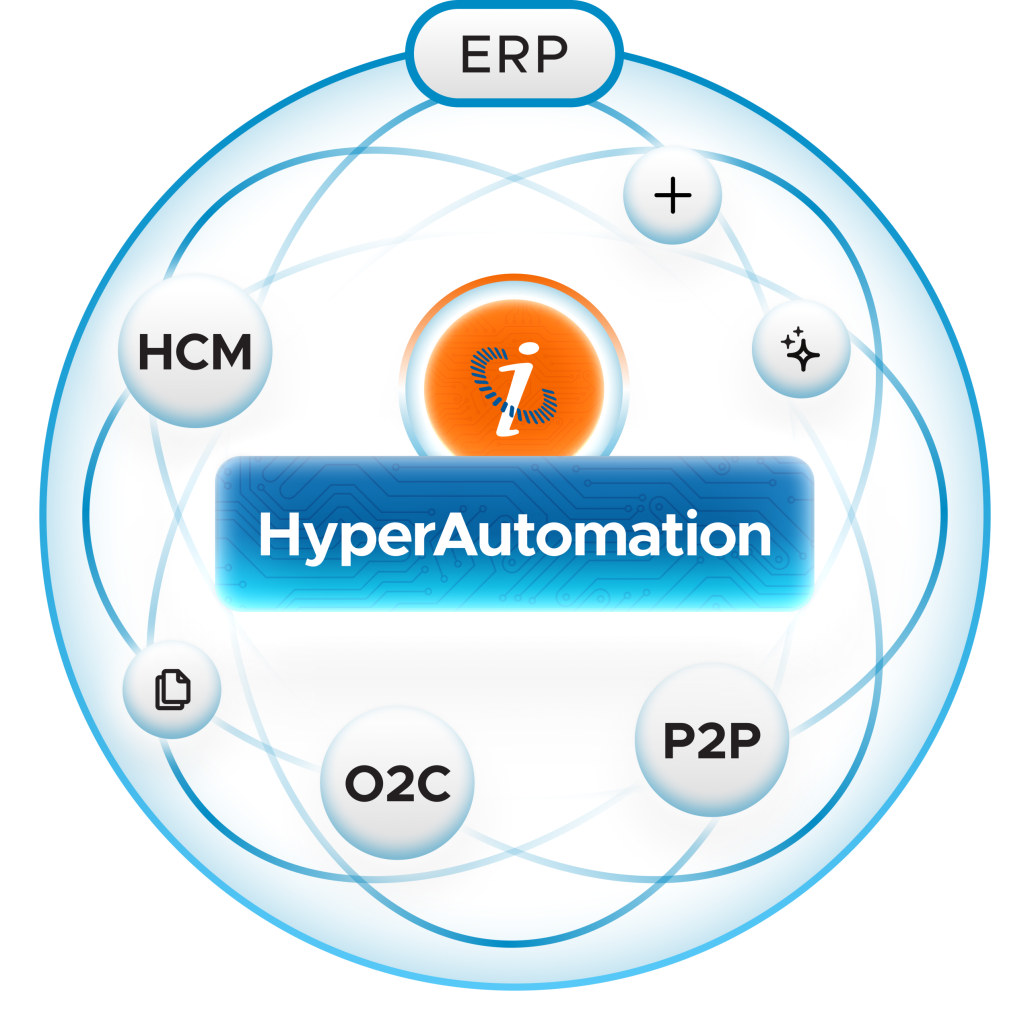
ERP integration quality directly affects both cost and ROI. Basic integrations simply move data between systems. In contrast, IntelliChief’s AI-enabled HyperAutomation platform operates alongside the ERP and uses real-time integration to apply business rules, GL structures, vendor records, and tolerance thresholds to automate AP processes at enterprise scale.

How Match2ERP AI Agents Prevent Financial Exposure Before ERP Posting
Rather than merely “connecting” at a surface level, IntelliChief uses Match2ERP AI agents within the IntelliChief platform to validate invoice data against ERP master data and transactional records before ERP vouchering or posting. This approach reduces downstream exceptions, prevents overpayments, and minimizes financial exposure — without embedding automation inside the ERP itself.
ERP-aligned automation also provides real-time visibility into AP activity without requiring users to repeatedly sign into the ERP. Automation performs validation, matching, GL coding, and data entry steps through integration, eliminating repetitive manual work and accelerating exception resolution.
Why Should Enterprises Optimize Accounts Payable Processes Before Automation?
3 Foundational Steps: Standardizing Formats, Approval Hierarchies, & Exception Rules
Enterprises maximize AP automation ROI by standardizing operational workflows prior to software deployment. Establishing uniform invoice ingestion formats, multi-tiered approval hierarchies, and clear tolerance thresholds prevents automating broken legacy workflows. Beginning implementation inside a single business unit before expanding enterprise-wide onto a unified AI HyperAutomation platform ensures predictable time-to-value, seamless ERP integration, and scalable process governance across global finance operations.
3 Foundational Steps for Pre-Automation Optimization
-
Standardize Invoice Ingestion: Align vendor invoice submission channels and formatting requirements to maximize automated optical and digital capture rates.
-
Streamline Approval Hierarchies: Codify multi-level signature levels and approval matrices directly into system logic to prevent operational bottlenecks.
-
Define Tolerance & Exception Rules: Set rigid pricing and quantity tolerance thresholds to automate routine approvals and isolate true discrepancies for manual review.
Executing a Phased Rollout Roadmap on a Unified HyperAutomation Platform
Enterprise Rollout Roadmap Strategy
-
Phased Business-Unit Deployment: Validate end-to-end integration, GL coding, and matching rules within a single division to refine operational practices in a controlled environment.
-
Enterprise Scaling via HyperAutomation: Roll out verified workflows across remaining divisions, subsidiaries, and ERP environments on a unified platform to ensure consistent compliance, audit trails, and long-term cost containment.
How to Choose the Right Enterprise AP Automation Platform: 5 Evaluation Criteria
Selecting the right enterprise AP automation platform requires evaluating end-to-end process coverage, deep ERP alignment, and autonomous validation rather than basic document capture. In complex environments powered by SAP, Oracle, or Infor, modern AP automation functions as a high-return strategic investment. Replacing manual processing eliminates costly human errors, duplicate payments, and compliance vulnerabilities, driving predictable payback and scalable operational control across the entire invoice-to-pay lifecycle.
When evaluating AP automation solutions, enterprises should prioritize:
1. Native ERP Integration for SAP, Oracle, and Infor Environments
Native ERP Architecture: Prioritize bi-directional integration that validates against live vendor masters, purchase orders, and general ledger structures in SAP, Oracle, or Infor without custom coding.
2. End-to-End AP Lifecycle Automation on a Single Platform
Unified Lifecycle Automation: Ensure the solution manages the complete workflow—from intelligent optical capture to GL coding, exception routing, approval hierarchies, and direct ERP posting.
3. Real-Time Line-Item Matching, Fraud Prevention, and Data Validation
Real-Time Fraud & Data Controls: Require automated line-item 2-way and 3-way matching alongside automated duplicate detection to prevent payment leakage before posting.
4. Structured Implementation Methodology and Process Best Practices
Expert Implementation Support: Partner with solution providers offering proven change management and workflow optimization tailored to enterprise ERP configurations.
5. Predictable Total Cost of Ownership (TCO) Aligned with Long-Term ROI
TCO and Value Transparency: Select transparent pricing structures built around long-term business outcomes and measurable straight-through processing (STP) rates rather than hidden per-click fees.
hy Enterprise AP Automation Is a Strategic Investment, Not a Cost
The Hidden Costs of Inaction: Manual Labor, Rework, Delays, and Financial Leakage
When implemented correctly, AP automation reduces per-invoice costs, strengthens controls, and enables scalable, touchless processing across complex ERP environments. While many organizations begin by asking how much AP automation costs, the more important question is what manual AP processing is already costing the enterprise in labor, errors, delays, and financial risk.
A properly implemented, AI-enabled AP automation platform typically delivers measurable returns quickly and continues generating operational and financial value long after deployment.
Schedule an ERP-Specific AP Automation Demonstration & ROI Assessment
If AP modernization is a priority, the next step is to evaluate how automation would operate within your ERP environment. Use the links below to schedule a live IntelliChief demo and review expected outcomes with a solution specialist.